ADHD & Executive Function Testing
What Can You Expect From ADHD Testing at Dragonfly Behavioral Health?
ADHD is more than difficulty paying attention. It can affect working memory, impulse control, organization, time management, emotional regulation, motivation, and the ability to begin or complete everyday tasks.
At Dragonfly Behavioral Health Services, our evaluations are designed to build a clear and individualized understanding of how attention and executive functioning affect performance at school, work, home, and in relationships. The clinical interview serves as the foundation of the evaluation and is supported by standardized testing, behavioral rating scales, developmental history, and information about real-world functioning.
The goal is not simply to determine whether ADHD is present. We also identify personal strengths, areas of difficulty, and other factors that may be contributing to similar symptoms so that recommendations are practical, specific, and relevant to daily life.
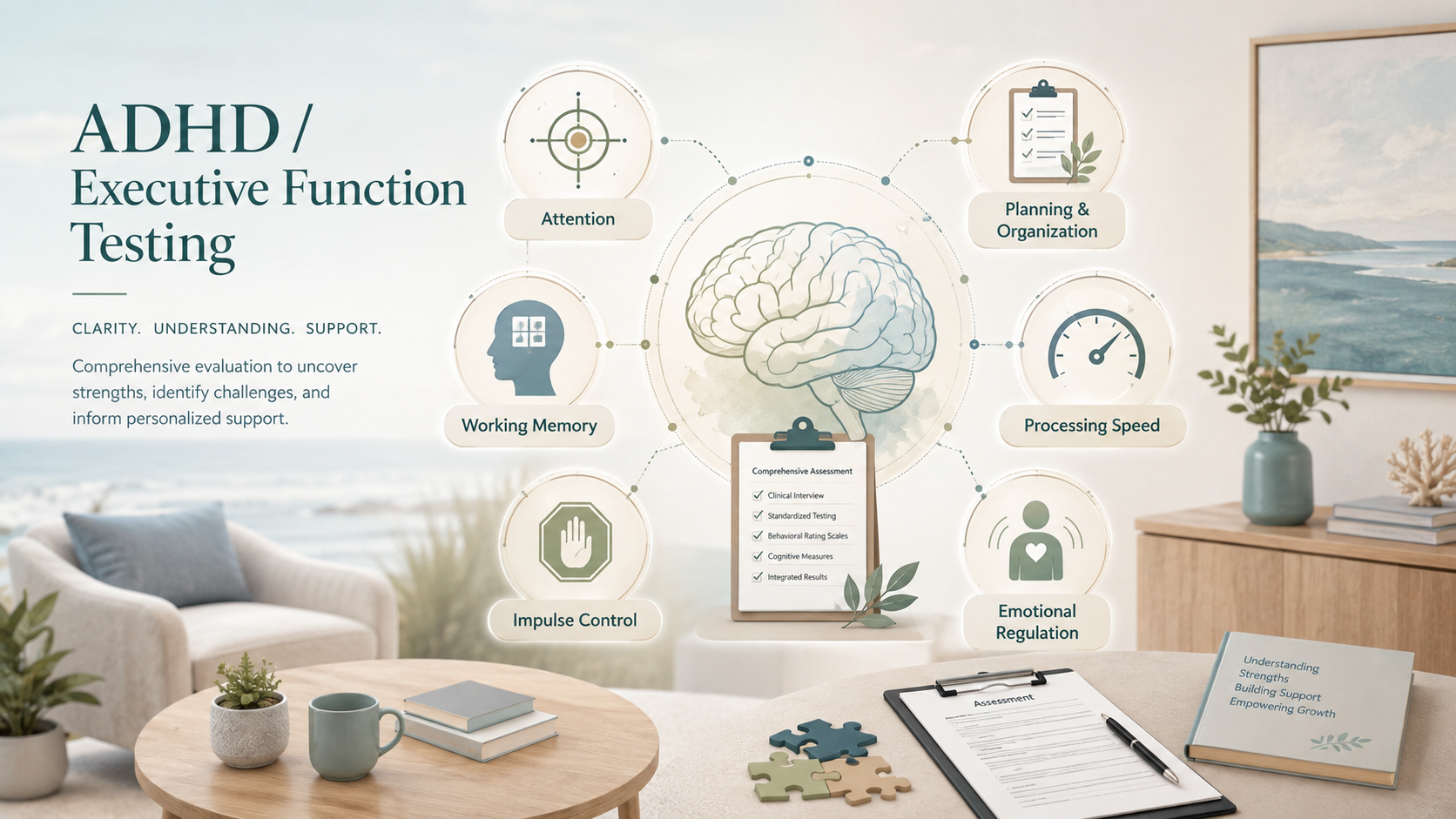
What Does the Evaluation Examine?
Attention and Focus:
We evaluate the ability to sustain attention, manage distractions, shift focus when needed, and remain engaged during repetitive or mentally demanding tasks.
Working Memory:
Working memory allows a person to briefly hold and use information while completing a task. Difficulties may appear as forgetting instructions, losing track of steps, or struggling to organize thoughts.
Impulse Control:
Testing may examine response inhibition—the ability to pause, consider consequences, and resist reacting automatically.
Planning and Organization:
Executive functioning affects the ability to prioritize, estimate time, initiate tasks, organize materials, and follow a plan through completion.
Processing Speed:
Processing speed reflects how efficiently a person can recognize information, make decisions, and respond accurately under time demands.
Emotional Regulation:
ADHD may also affect frustration tolerance, emotional intensity, flexibility, and the ability to recover after becoming overwhelmed or upset.
Our Evaluation Process
1. Comprehensive Clinical Interview:
We begin by discussing current concerns, developmental history, school or work performance, relationships, emotional functioning, medical history, sleep, and previous treatment. For children and adolescents, caregiver input and relevant school information may also be incorporated.
2. Standardized Assessment:
Testing is selected according to the patient’s age, presenting concerns, and individual needs. The assessment may examine attention, memory, processing speed, inhibition, executive functioning, and related cognitive or emotional factors.
3. Behavioral Rating Scales:
Rating scales help describe how symptoms appear in everyday settings. Depending on the patient’s age and circumstances, information may be gathered from the patient, parents, teachers, or other individuals who know the patient well.
4. Integrated Interpretation:
Results are interpreted as part of the complete clinical picture rather than viewed in isolation. We consider whether the pattern is most consistent with ADHD or whether anxiety, depression, trauma, sleep problems, learning difficulties, medical conditions, or other factors may also be affecting performance.
5. Feedback and Recommendations:
After the evaluation, we review the findings in clear, understandable language. Patients and families receive individualized recommendations that may include treatment options, behavioral strategies, school or workplace accommodations, executive-function supports, and practical next steps.
What Will You Receive?
Following the evaluation, you will receive:
A clear explanation of the findings
Diagnostic impressions when appropriate
An individualized profile of strengths and challenges
Practical recommendations for home, school, or work
Treatment recommendations based on the results
Documentation to support reasonable academic or workplace accommodations when clinically appropriate
Who May Benefit From Testing?
An evaluation may be helpful when a child, adolescent, or adult experiences persistent difficulties with:
Distractibility or inconsistent attention
Forgetfulness and frequently losing belongings
Procrastination or difficulty beginning tasks
Poor time awareness or chronic lateness
Disorganization and missed deadlines
Incomplete schoolwork or inconsistent performance
Impulsive decisions or difficulty waiting
Emotional reactivity and low frustration tolerance
Feeling capable but unable to perform consistently
Uncertainty about whether symptoms reflect ADHD or another concern
Understanding the Whole Person
ADHD can look different from one person to another. Some individuals are visibly restless or impulsive, while others quietly struggle with mental overload, inconsistent motivation, disorganization, or difficulty translating their abilities into dependable performance.
Our approach looks beyond a symptom checklist. We consider the patient’s history, environment, strengths, challenges, and everyday experiences to develop a meaningful understanding of what is happening and what may help.